Multi-pack bundles are worth considering given that most homes need multiple detectors for adequate coverage anyway.
The question is best approached by working out how many alarms the house actually requires before looking at any pricing at all. Coverage guidance is written per level and per sleeping area rather than per household, so the answer for a two storey home with a basement and bedrooms on one floor is rarely one. Once that number is settled, a multi pack either matches it or it does not, and the discount becomes a secondary consideration rather than the reason for the purchase.
- Multi-packs often offer modest per-unit savings since most homes need multiple detectors anyway.
- Match bundle size to your home’s actual coverage needs rather than an arbitrary quantity.
- Individual purchase may make more sense if you need a specific mix of detector types.
- Bundles are worth considering given typical whole-home coverage requirements.
Typical Bundle Savings
Multi-packs (typically 2-3 units) often offer a modest per-unit discount compared to buying individually, since most homes need multiple detectors regardless.
The saving on a two or three pack is generally modest in percentage terms, and it is more useful to think about cost across the service life. A sealed ten year unit bought as part of a three pack works out to a few dollars per protected year per floor. Framed that way, the decision between packs rarely turns on the discount, and stretching the budget to cover an additional level is almost always a better use of the difference than saving a few dollars on the units you were buying anyway.
Buying together has a scheduling benefit that outlasts the discount. Units purchased in one batch reach end of life at approximately the same time, so replacement becomes a single task on a single date rather than three separate ones spread across three years. Households that add alarms one at a time over a decade end up with a staggered set of expiry dates that is much easier to lose track of, which is how expired units stay on ceilings.
Matching Bundle Size to Your Home’s Needs
Match the bundle size to your home’s actual coverage needs (every level plus sleeping areas) rather than buying more or fewer units than your home genuinely requires.
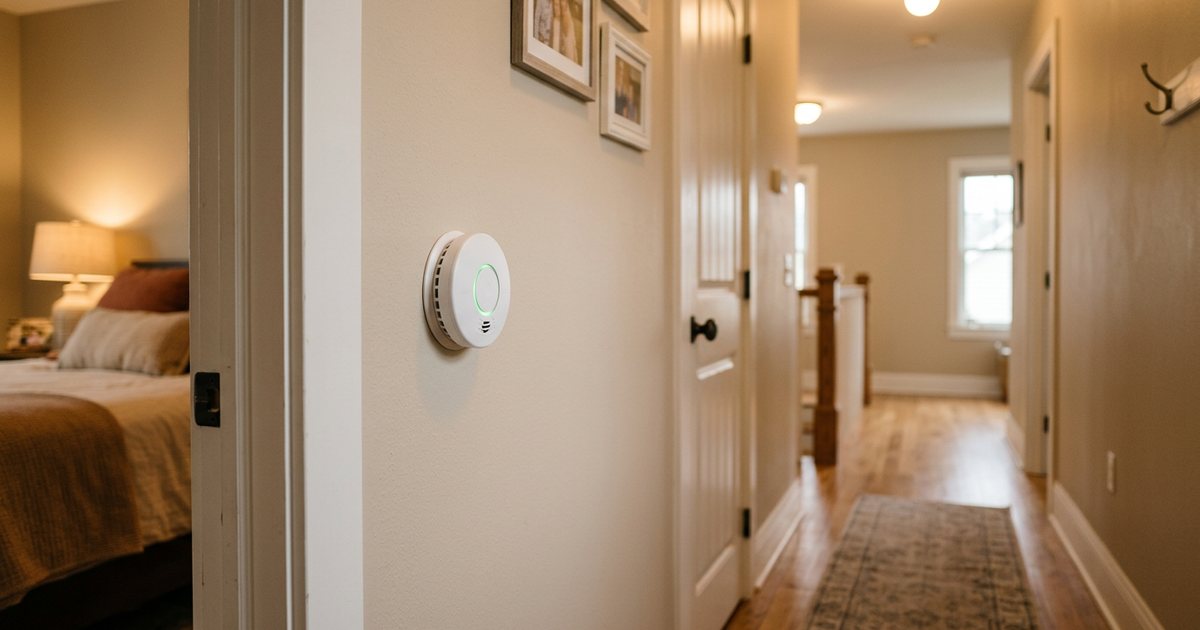
Counting is straightforward once you know the rule. Plan for one alarm on every level that people occupy, including a finished basement and a finished attic, plus one outside each separate sleeping area. A house with bedrooms at opposite ends of an upstairs hallway has two sleeping areas for this purpose, not one. Add one for the level adjoining an attached garage if that level would not otherwise have coverage near the connecting door.
A few placements are counterproductive rather than merely unnecessary. Directly above or immediately beside a furnace, water heater, or gas range, an alarm will pick up the brief and normal spike from ignition and produce nuisance alarms, which is why EPA advises keeping an alarm at least fifteen feet from any fuel-burning appliance.[1] Bathrooms and other humid rooms, unconditioned detached garages, dead air corners, and locations in direct sun or in front of supply vents are all poor choices for their own reasons.

When Individual Purchase Makes More Sense
If you need a specific mix of detector types (some combination smoke/CO, some CO-only) individual purchase may make more sense than a uniform bundle.
Mixed requirements are the usual reason to buy separately. A hallway outside bedrooms is a natural spot for a combination smoke and carbon monoxide unit, while a basement near the mechanical equipment may be better served by a carbon monoxide only alarm placed at the required distance, since a combination unit there would be subject to the placement constraints of the smoke sensor as well. Buying a uniform three pack forces one answer onto locations with different needs.
Replacing hardwired interconnected alarms is the other case. Manufacturers use different connector plugs and different interconnect signalling, so a hardwired unit from one brand generally cannot be added to an existing circuit from another. When replacing part of a hardwired set, either match the existing brand and interconnect protocol or plan to replace the whole set at once, and check whether the mounting plate from the old unit is compatible before buying a pack of anything.

Check the Manufacture Date on Every Unit in the Pack
This is the check most worth adding to a bundle purchase, and it takes under a minute. The sensor service life is counted from the date of manufacture, not from the date you bought the alarm or the date you screwed it to the ceiling. Multi packs sit in distribution longer than fast moving items, and it is entirely possible to open a box of three ten year units that were built eighteen months ago, which quietly turns them into eight and a half year units.
The date is printed on the back or side of the housing, sometimes as a plain date and sometimes as a manufacturing code alongside a separate replace by date. Some manufacturers print the replacement date directly, which removes the arithmetic. Check every unit in the pack rather than one, since packs are not always filled from a single production run and the dates can differ.
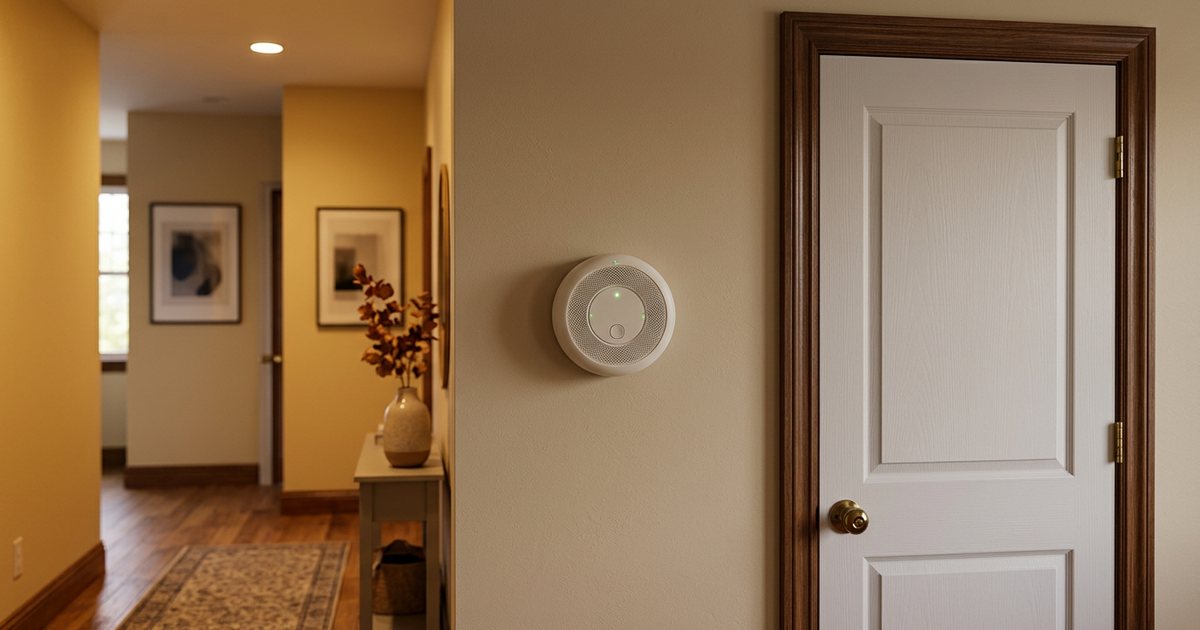
Write the replacement date on the housing in permanent marker before mounting, and record it in whatever household maintenance note you keep. The alarm will signal end of life when it arrives, but that signal is easy to mistake for a low battery chirp, and having the date written on the unit turns an ambiguous chirp at two in the morning into a settled question.
FAQ
How many detectors does a typical home actually need?
At least one per level plus units near sleeping areas is common guidance — use this to determine whether a specific bundle size matches your home’s actual needs.
Do all the units in a multi pack expire at the same time?
Usually but not always. Service life runs from each unit’s own manufacture date, and packs are not guaranteed to be filled from a single production batch. Check the date printed on the back of each one rather than assuming they match, and note the earliest date as the point at which you plan the replacement round.
Can I mix brands on one interconnected hardwired circuit?
Generally no. Connector plugs and interconnect signalling differ between manufacturers, so hardwired units from different brands typically will not communicate and may not physically connect. When replacing part of a hardwired set, match the existing brand and model family or replace the complete set together.
Is one alarm per floor enough if all the bedrooms are upstairs?
One per level is the baseline, and the additional requirement is coverage outside each separate sleeping area. If the upstairs bedrooms open onto a single hallway, one correctly placed alarm in that hallway generally covers both requirements for that floor. If bedrooms are split across separate halls or wings, that counts as more than one sleeping area.
Confirm bundle detectors are UL 2034 certified individually, not just as an overall product line claim.
References
- Carbon Monoxide Alarms: Protect Your Family and Yourself (infographic text). U.S. Environmental Protection Agency
These statements have not been evaluated by the Food and Drug Administration. This information is not intended to diagnose, treat, cure, or prevent any disease. Content is for informational purposes only and is not medical advice; consult a qualified healthcare provider before starting any supplement. As an Amazon Associate we earn from qualifying purchases.
