A few optional accessories can enhance your core CO detector setup, though none replace the detector itself as the essential item.
It is worth being blunt about the ranking before going through the options. Adding a second correctly placed alarm to an uncovered floor does more for a household than any accessory on this list. Accessories are worth considering once coverage is already complete, every unit is within its rated service life, and the alarms are audible from the bedrooms. Before that point, money spent on add ons is money spent on the wrong thing.
- Smart home hub integration can consolidate alerts for smart detector models.
- Ensure hardwired detector backup batteries are current, especially relevant during power outages.
- Basic mounting accessories help with placement in unusual locations.
- These are optional enhancements — the detector itself remains the essential core item.
Smart Home Hub Integration
For smart detector models, integrating with an existing smart home hub can consolidate alerts alongside other home monitoring in a single app.
What integration genuinely adds is notification beyond the range of the horn, and a record. An alert reaching a phone matters when nobody is home to hear the alarm, when the household includes someone whose alarms you want routed to a second person, or when a property sits empty for long stretches. Event logging is the underrated part, since a timestamped history of alarms and faults is considerably more useful to a technician than anyone’s recollection.
What it does not add is any improvement to detection. The sensor and the local horn operate on the device itself, so a network or cloud outage removes the phone notification and leaves the alarm working. That distinction is worth holding onto, because power outages frequently take the network down as well, and outages are also when generator use raises risk. Treat remote alerting as a supplement to being able to hear the alarm, never as a replacement for it.
Backup Battery Packs
For hardwired detectors with battery backup, ensuring your backup battery is current protects against a power outage compromising your detection during exactly the scenario (power loss, potential generator use) when risk may be elevated.
For hardwired alarms, the backup battery is the component that keeps the unit functioning through exactly the conditions that raise risk. A winter storm outage is the scenario in which portable generators come out, in which people run engines close to the house, and in which alternative heating appears, and a hardwired alarm with a dead backup battery is inert for all of it. Replacing that battery on schedule is the highest value maintenance item on any hardwired system.
When replacing hardwired units, models with a sealed ten year backup are worth the modest premium for the same reason sealed battery only units are. There is nothing to forget and nothing to remove, and the backup and the sensor reach end of life together. If your existing units take a replaceable backup battery, put the swap on the same annual reminder as the alarm test rather than waiting for the chirp that announces it.

Mounting Accessories
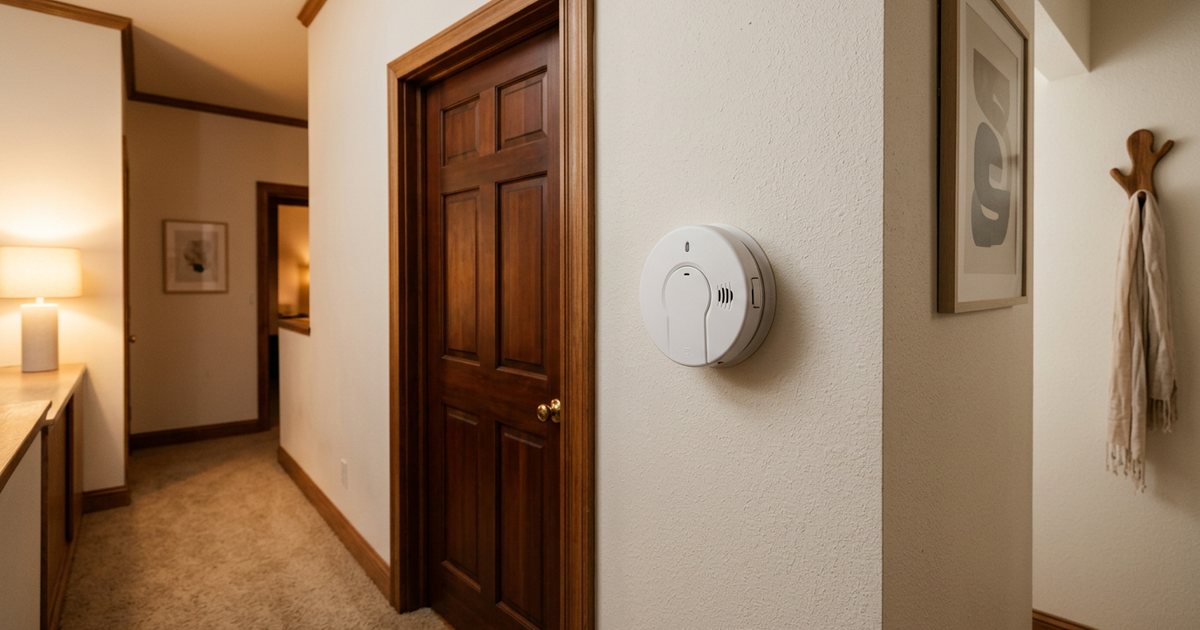
Basic mounting accessories (brackets, plate adapters) can help with proper placement in specific locations like high ceilings or unusual wall configurations.
The useful ones solve specific physical problems. Brackets and extension plates help in vaulted or high ceilings where a unit would otherwise sit in a dead air pocket at the apex. Adapter plates matter when replacing hardwired alarms, since mounting plates and connector plugs differ between manufacturers and a replacement from a different brand may not fit the existing plate or wiring harness at all. Check that compatibility before buying replacements rather than after.
Some mounting choices are worse than no accessory. Do not place an alarm inside a cabinet or closet, behind a curtain or furniture[1], directly above a doorway, or in the corner where a wall meets a ceiling, since all of these are dead air spaces or acoustic traps. Do not mount one in a bathroom or laundry, or in the direct airflow from a supply vent or ceiling fan[1]. Audibility from inside each bedroom with the door closed is the test that any mounting decision has to pass.

Accessories That Do Not Do What People Expect
Air purifiers are the most common mistaken purchase in this category. HEPA filtration removes particles and has no effect whatsoever on a gas, and ordinary activated carbon filters do not reliably adsorb carbon monoxide either. No consumer air cleaner should be treated as a control measure here. The same applies to houseplants, gel or bag style absorbers marketed for general air quality, and ozone generators, which introduce a separate respiratory hazard of their own without addressing this one.
General indoor air quality monitors are the subtler version of the same mistake. Many report temperature, humidity, particulates, and volatile organic compounds while either omitting carbon monoxide entirely or including a sensor that is not part of a listed alarm. A device that displays a carbon monoxide number is not necessarily built to alarm at the required thresholds, or to keep doing so for a rated service life, and it should never take the place of a listed alarm on a wall.
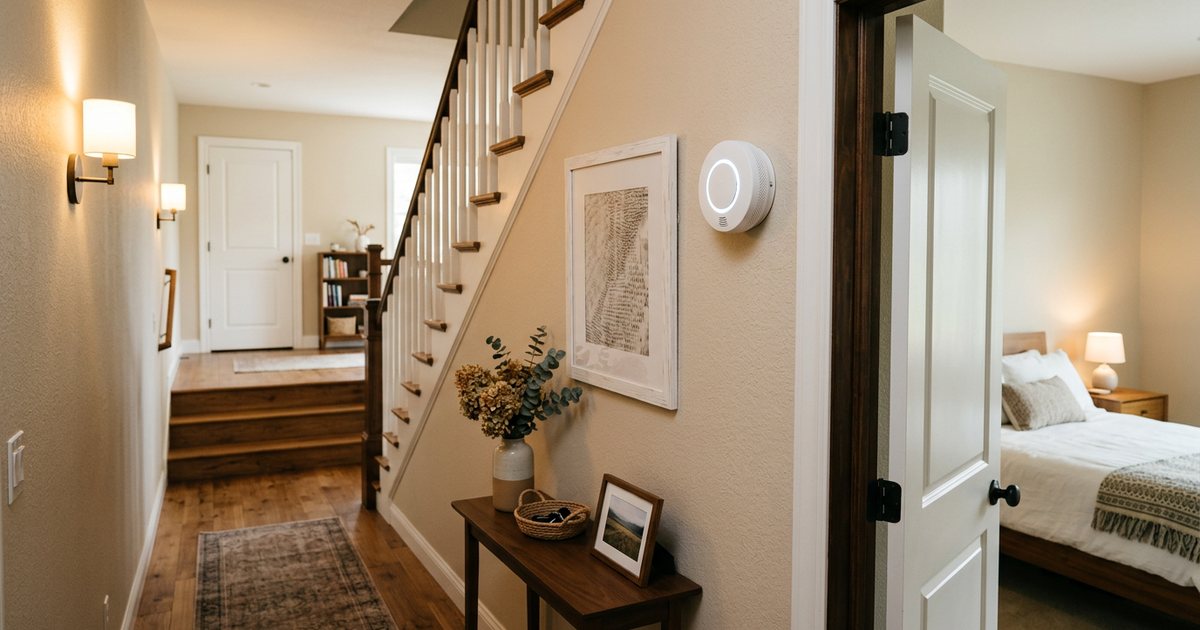
The one addition that genuinely extends what your setup can tell you is another sensing device rather than a filtering one. A plug in unit with a digital readout in a room you occupy frequently, or a portable low level monitor for households with pregnancy, infants, older adults, or cardiac and respiratory conditions, adds information the listed alarm is deliberately built not to give you. A small travel or plug in alarm is also worth carrying for hotels, holiday rentals, and cabins, where the equipment is unknown and often absent.
FAQ
Do I really need any accessories beyond the detector itself?
No — these are optional enhancements. A properly placed, maintained detector alone provides the essential safety function.
Will an air purifier reduce carbon monoxide in the house?
No. HEPA filters capture particles and do nothing to gases, and ordinary carbon filters do not reliably adsorb carbon monoxide. There is no consumer air cleaning product that should be relied on for this. The effective responses are removing or repairing the source, correct venting, and ventilating with outdoor air.
Does a smart alarm still work if the internet is down?
Yes. Detection and the local horn run on the device and do not require a connection. A network outage removes the remote notification only. This is worth remembering because power cuts often take the network with them, and those are also the periods when generator use raises risk.
Do I need an alarm when travelling or in a rental?
It is a reasonable precaution, since holiday rentals, cabins, and older hotels vary widely in whether alarms are installed and current. A small battery or plug in unit packs easily and takes seconds to set up. It is worth particular consideration where the accommodation has gas heating, a fireplace, or an attached garage.
Don’t let accessory shopping distract from the core essentials: proper detector placement and maintenance.
References
- U.S. Consumer Product Safety Commission. Carbon Monoxide Questions and Answers. CPSC
These statements have not been evaluated by the Food and Drug Administration. This information is not intended to diagnose, treat, cure, or prevent any disease. Content is for informational purposes only and is not medical advice; consult a qualified healthcare provider before starting any supplement. As an Amazon Associate we earn from qualifying purchases.
