CO detection and safety guidance use specific terminology worth understanding. This glossary covers the terms you’re most likely to encounter.
- ppm measures CO concentration; COHb measures actual blood exposure level.
- UL 2034 is the specific safety certification standard for CO detectors.
- Incomplete combustion and backdrafting are common mechanisms producing or introducing CO indoors.
- Understanding these terms helps you interpret detector specifications and safety guidance correctly.
Measurement Terms
ppm (parts per million): the standard unit for CO concentration in air. COHb (carboxyhemoglobin): the compound formed when CO binds to hemoglobin in blood, measured in medical testing to assess actual CO exposure/poisoning severity.
Detector Certification Terms
UL 2034: the Underwriters Laboratories safety standard specifically for CO detectors, indicating the device meets established alarm-threshold and reliability testing. Combination alarm: a device combining smoke and CO detection in one unit.

Combustion and Appliance Terms
Incomplete combustion: when a fuel-burning appliance doesn’t fully burn its fuel, producing CO as a byproduct — often caused by inadequate air supply or appliance malfunction [1]. Backdrafting: when combustion exhaust gases (including CO) flow back into a home instead of venting outside, often due to negative pressure or blocked venting.
Alarm and Response Terms
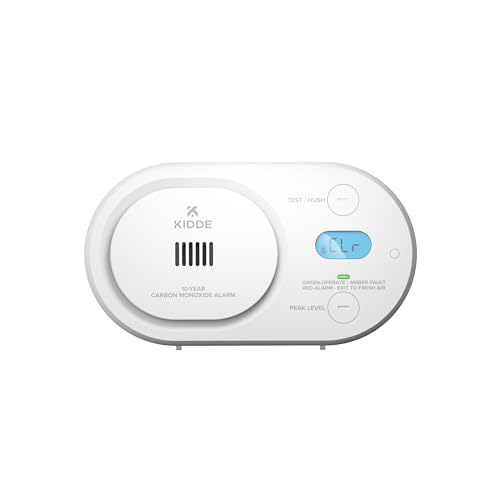
Alarm threshold: the concentration and exposure duration combination at which a detector is required to sound, defined by the certification standard rather than chosen by the manufacturer. Peak level memory: a feature on some units that stores the highest reading recorded, which can be useful information for responders or a technician after an event. Digital display: a readout of a current or stored reading, present on some models and absent on others.
Hush or silence button: a control that quiets a sounding alarm temporarily. It does not address the cause, and silencing an alarm is not a substitute for the evacuate-and-call response described elsewhere on this site. End-of-life signal: a distinct chirp or announcement indicating the sensor has reached the end of its rated service life and the unit itself needs replacing, which is a different message from a low-battery chirp.
Placement and Installation Terms
Sleeping area: the region of a home containing bedrooms, including the hallway serving them, which manufacturer instructions and local requirements commonly treat as a specific placement target. Dead air space: a pocket, typically at a wall and ceiling junction or an apex, where air circulates poorly and where placement instructions generally advise against mounting. Level: a storey of the home, used in guidance that calls for coverage on each one.
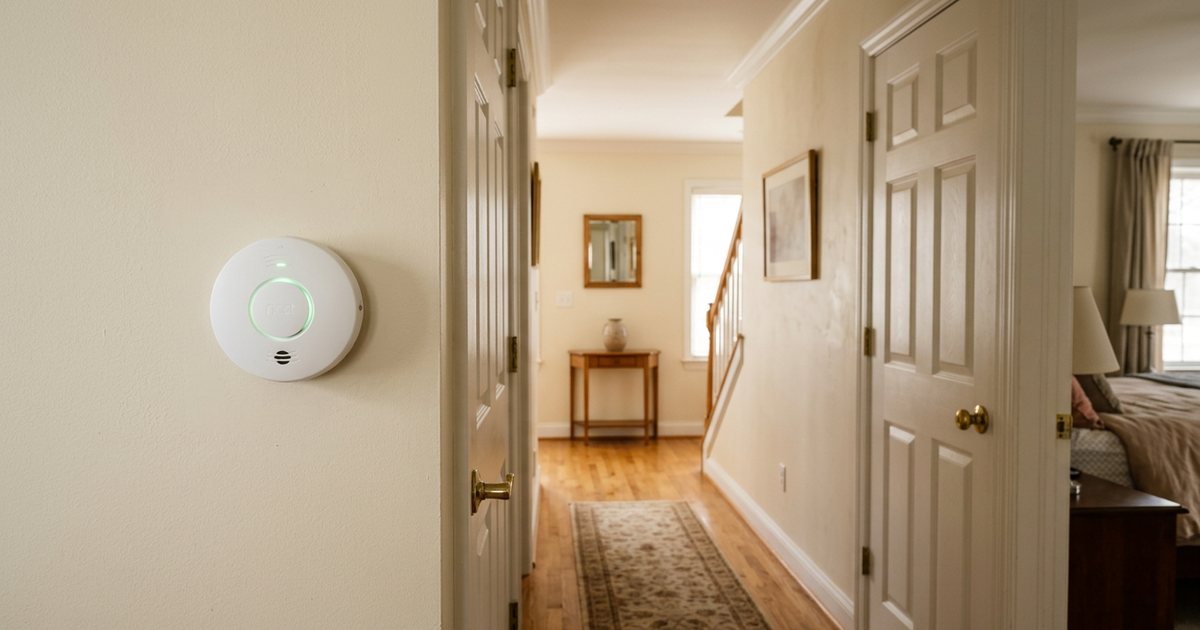
Hardwired: a unit powered by the home’s electrical system, usually with a battery backup for outages. Interconnected: a set of units linked so that one detecting a hazard triggers the others, which matters in larger or multi-storey homes where an alarm on one level may not be heard on another. Standalone or battery-only: a self-contained unit that operates independently of both the electrical system and any other alarm.
FAQ
What does UL 2034 certification mean for a CO detector?
It indicates the device has passed Underwriters Laboratories’ specific safety standard testing for CO detectors, covering alarm threshold accuracy and reliability.
What is the difference between a low-battery chirp and an end-of-life chirp?
A low-battery chirp is resolved by replacing the battery. An end-of-life signal means the sensor has reached the end of its rated life and the whole unit needs replacing, so a new battery will not clear it. The manual for your model describes the specific pattern each one uses.
What does interconnected mean in practice?
It means the alarms are linked, so a unit detecting a hazard sounds the others as well. The practical benefit is in larger or multi-storey homes, where a single sounding unit on a distant level may not wake someone.
Does a combination alarm mean I need fewer devices?
It combines two detection functions in one housing, so it can reduce the number of separate devices on a wall. It does not reduce how many locations need coverage, since placement guidance for each hazard still applies. Check the manufacturer instructions, as ideal placement for the two can differ.
This glossary is for general orientation — refer to your specific detector’s documentation for details.
References
- Carbon Monoxide's Impact on Indoor Air Quality. U.S. Environmental Protection Agency
These statements have not been evaluated by the Food and Drug Administration. This information is not intended to diagnose, treat, cure, or prevent any disease. Content is for informational purposes only and is not medical advice; consult a qualified healthcare provider before starting any supplement. As an Amazon Associate we earn from qualifying purchases.
