Adding CO-specific items to your home buying checklist ensures this hazard isn’t overlooked amid other inspection priorities.
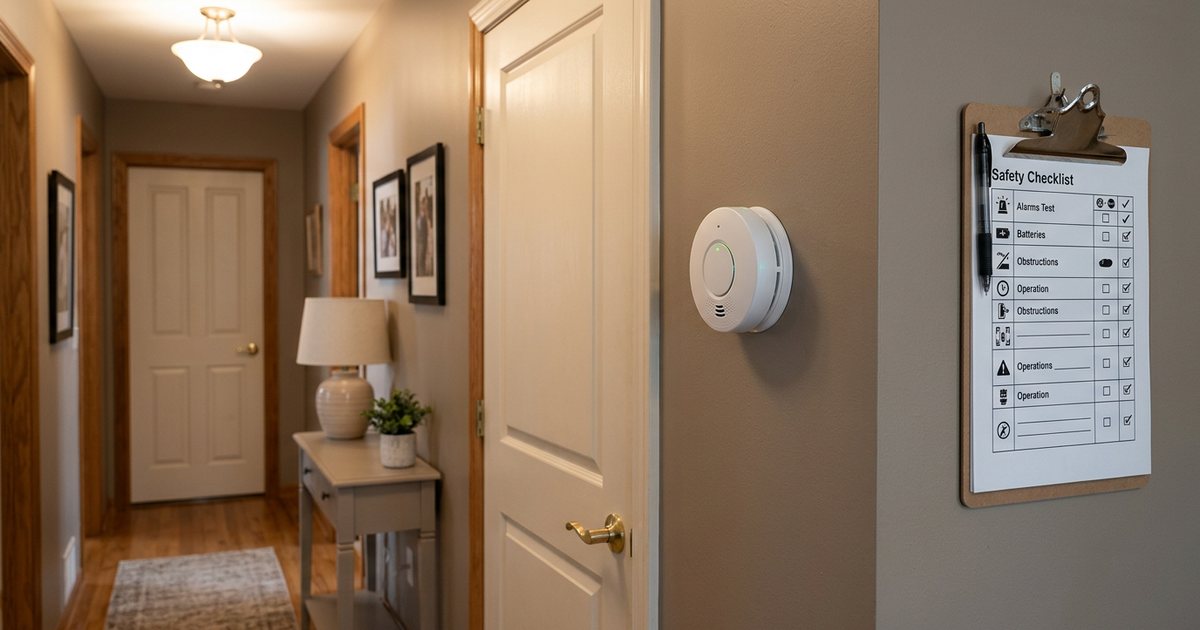
- Confirm functioning, properly placed detectors during inspection.
- Ask your inspector specifically about fuel-burning appliance age and condition.
- Verify state-specific compliance requirements are met before closing.
- Test all detectors immediately upon move-in and schedule assessment if not recently completed.
During Inspection
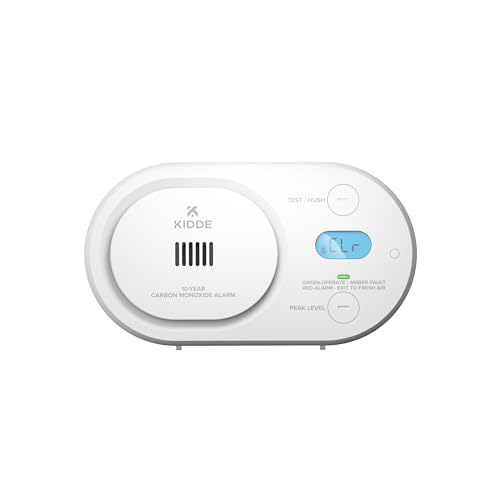
Confirm functioning, properly placed CO detectors are present, and ask your inspector specifically about the age and condition of fuel-burning appliances (furnace, water heater).
Before Closing
Verify your state’s specific CO detector compliance requirements are met, and negotiate any gaps (missing detectors, appliance concerns) as part of the closing process.

After Moving In
Test all detectors immediately upon move-in and schedule a professional combustion appliance assessment within your first year if one wasn’t recently completed.
What to Ask the Seller in Writing
Ask for the ages and service history of every fuel-burning appliance, and ask for it in writing rather than in conversation. Requesting service records, any recent combustion or safety assessment, and confirmation of whether the appliances have been serviced since the last occupancy change turns vague reassurance into something specific. A seller who has kept records will usually be glad to produce them, and that in itself tells you something about how the house has been run.
Ask directly whether there has been any prior carbon monoxide incident or alarm activation at the property. Disclosure obligations differ by state and by circumstance, so what a seller is required to volunteer is not the same everywhere and is not something to assume. Asking the question explicitly, in writing, is the reliable route to an answer, and it creates a record of having asked.
Where a Standard Inspection Can Fall Short
A general home inspection is broad by design and largely visual. Inspectors commonly note the presence, apparent age and obvious condition of a furnace or water heater, and will flag visible problems with venting. What a general inspection typically does not include is the combustion analysis that measures what an appliance is actually producing while it runs, which is a different kind of test with different equipment.
That gap matters most in exactly the situations where it is easiest to overlook: an older heating system, an appliance with no service history, or a property that has been vacant. Where any of those apply, a separate evaluation by a qualified heating contractor is worth arranging alongside the general inspection. Confirm what is inside your inspection’s scope rather than assuming combustion testing is part of it, and schedule it early enough to matter to the transaction.
FAQ
Should CO safety be part of every home inspection?
It should be, especially for homes with fuel-burning appliances — confirm this is included in your inspection scope and don’t assume it’s automatically covered.
Is a general home inspection enough on its own?
It is a good baseline and it will catch visible problems, but it is not usually a combustion analysis. For an older system, or one with no service history, a separate evaluation by a qualified heating contractor is worth arranging.
Can I make carbon monoxide items a condition of closing?
Detector gaps and appliance concerns are commonly negotiated like other inspection findings, though what is customary varies by market and by contract. Raise them early, since anything requiring a contractor visit needs time before the closing date.
Does any of this apply to new construction?
Yes, in a reduced form. New systems are unlikely to have a service history to review, but confirming that detectors are present and correctly placed, and that required inspections were completed and documented, is still worth doing before you take possession.
Don’t assume a previous owner’s detector compliance or appliance maintenance history without direct verification.
These statements have not been evaluated by the Food and Drug Administration. This information is not intended to diagnose, treat, cure, or prevent any disease. Content is for informational purposes only and is not medical advice; consult a qualified healthcare provider before starting any supplement. As an Amazon Associate we earn from qualifying purchases.
