A CO detection system needs ongoing maintenance to remain effective over its full useful life, not just at initial installation.
- Keep records of each detector’s installation and end-of-life date to avoid missed replacements.
- Maintain an annual professional combustion appliance assessment schedule.
- Reassess detector placement and coverage after any major home change.
- This ongoing maintenance approach keeps your system effective over its full useful life, not just at initial setup.
Detector Rotation and Replacement Records
Keep a simple record of each detector’s installation date and manufacturer-specified end-of-life date, so replacement doesn’t get missed as detectors age past their sensor lifespan.
Detectors bought at the same time do not fail at the same time, and once a household has four or five units acquired over several years the replacement dates stop being memorable. The fix is a written record rather than a better memory. Write the install date on the unit itself with a marker at the moment it goes up, and keep one list somewhere durable with the location, model, manufacture date and the manufacturer’s stated end-of-life date for each unit.
That list is also what makes a chirp interpretable. An alarm signalling end of life and an alarm signalling a low battery are different events with different responses, and a household that knows a given unit is nine years old reads the chirp correctly instead of putting a battery in it.
Ongoing Professional Assessment Schedule
Maintain an annual professional combustion appliance assessment schedule (often bundled with furnace maintenance) as part of your system’s ongoing upkeep.

The appliance side of the schedule runs on its own clock. Annual professional servicing of the furnace, water heater and any other fuel-burning appliance is the routine that keeps the source problem from developing, and it is worth booking before the heating season rather than during it, when contractor availability is at its worst and an emergency call costs more.
Reassessing After Home Changes
Reassess your detector placement and count after any major home change (renovation, added fuel-burning appliance, finished basement) to ensure continued adequate coverage.

The Monthly and Seasonal Checks That Actually Get Done
Maintenance routines fail when they are too elaborate to survive a busy month. The version that tends to persist has three items. Press the test button on every unit monthly, which confirms the horn and the circuit rather than the sensor, and takes under a minute for a whole house. Replace batteries in any replaceable-battery unit on a fixed annual date you will not forget, and never silence a chirping alarm by removing the battery without replacing it. Once a year, physically look at each unit for dust, paint overspray and obstruction.
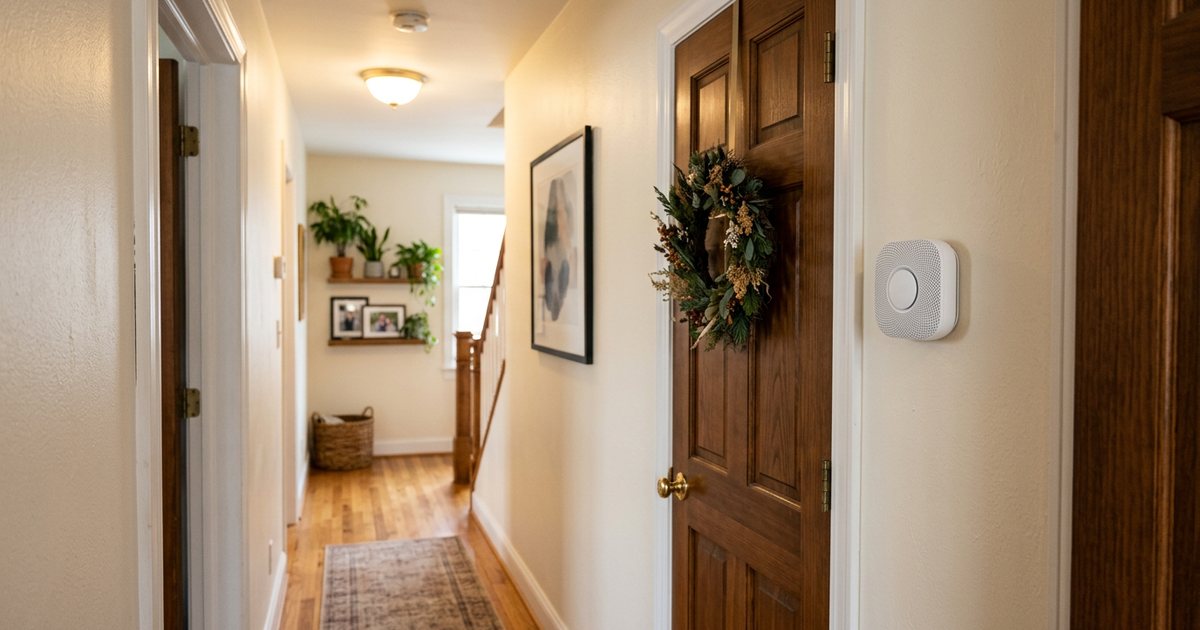
Two seasonal moments are worth adding because they map onto when risk actually rises. Before the heating season starts, book the appliance servicing and confirm every detector still tests. After any power outage, storm, or generator use, check that battery-backed units are still armed and that nothing was moved or unplugged during the disruption. Portable generator use in particular is a period of elevated risk, and it is exactly when a household is distracted.
Why Appliance Servicing Is the Core of Maintenance
Detector upkeep is the visible half of maintenance, but the authoritative guidance puts the weight on the appliances. EPA states that it is most important to be sure combustion equipment is maintained and properly adjusted[1], and its list of recommended steps includes having a trained professional inspect, clean and tune up the central heating system, meaning furnaces, flues and chimneys, annually, and repairing any leaks promptly.[1]
That ordering makes sense once you look at where household CO comes from. EPA’s own list of sources is largely a list of maintenance failures: leaking chimneys and furnaces; back-drafting from furnaces, gas water heaters, wood stoves and fireplaces; unvented kerosene and gas space heaters; and worn or poorly adjusted and maintained combustion devices such as boilers and furnaces, including cases where the flue is improperly sized, blocked, disconnected or leaking.[1] A detector tells you a failure has already happened. Servicing is what addresses the items on that list.
The difference is measurable rather than theoretical. EPA gives average levels in homes without gas stoves as 0.5 to 5 parts per million, levels near properly adjusted gas stoves as often 5 to 15 ppm, and levels near poorly adjusted stoves as possibly 30 ppm or higher.[1] “Properly adjusted” is precisely the variable a maintenance routine controls, and the gap between those two ranges is what the routine is buying.
EPA’s remaining recommended steps belong on an annual list rather than a monthly one: keep gas appliances properly adjusted; consider a vented space heater when replacing an unvented one; use proper fuel in kerosene space heaters; install and use an exhaust fan vented to outdoors over gas stoves; open flues when fireplaces are in use; choose properly sized wood stoves certified to meet EPA emission standards and make certain their doors fit tightly; and do not idle the car inside the garage.[1] OSHA’s workplace version of the same principle is to maintain equipment and appliances that can produce CO, such as water heaters, space heaters and cooking ranges, in good working order, to promote safe operation and to reduce CO formation.[2]
Generators and the Window After an Outage
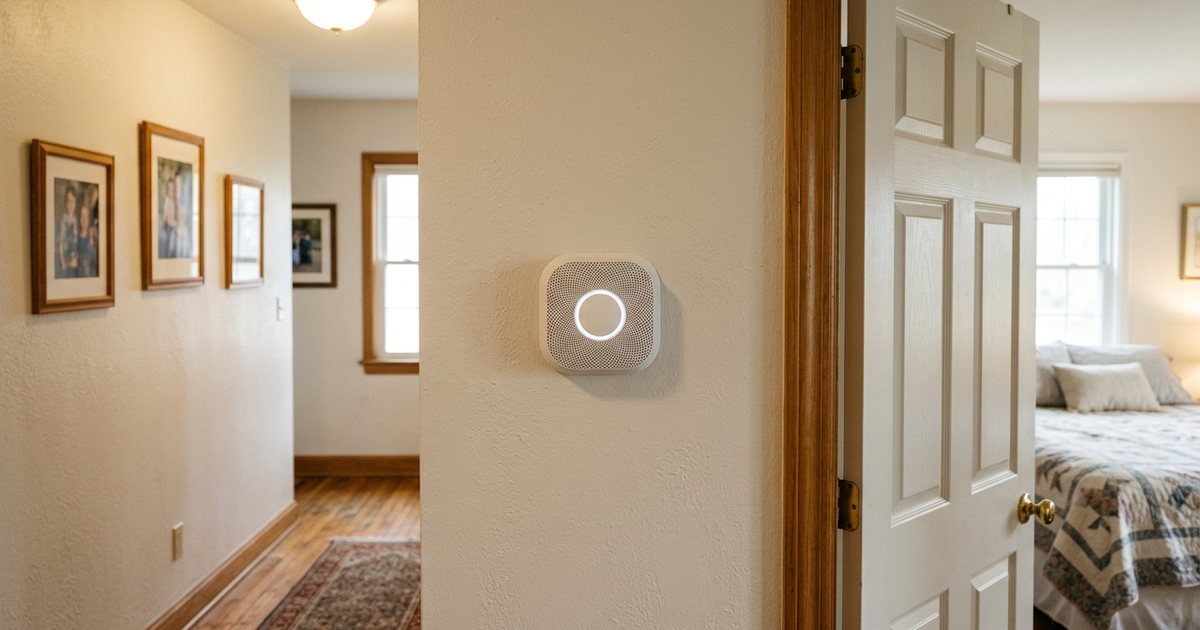
The seasonal check above singles out generator use, and that emphasis is not ours. EPA carries a standing alert on its carbon monoxide page telling readers never to use a portable generator inside homes, garages, crawlspaces, sheds or similar areas, and warning that deadly levels of carbon monoxide can quickly build up in these areas and can linger for hours, even after the generator has shut off.[1]
The phrase about lingering for hours is what makes this a maintenance-window question and not only an operating rule: a space that seemed fine once the engine stopped can still be dangerous, which is why the post-outage check is about whether the space and the detectors are both actually clear.
EPA also notes that additional ventilation can be used as a temporary measure when high levels of CO are expected for short periods.[1] Temporary, and alongside the servicing above rather than instead of it.
FAQ
How do I keep track of when to replace multiple detectors?
A simple written or digital record of each unit’s installation date and manufacturer-specified end-of-life date prevents any single detector from being overlooked.
Does pressing the test button prove the sensor works?
No. The test button verifies the horn, the battery and the alarm circuit, not the carbon monoxide sensor itself. That is why replacing units at the manufacturer’s stated end of life matters: a unit past its sensor life can still pass a button test while no longer detecting reliably.
What should I do after using a portable generator?
Confirm the generator was operated well away from the building and never in a garage, basement or enclosed space, then check that all detectors are still armed and functioning once power is restored. Generator use is one of the highest-risk periods for CO in a home, and it usually coincides with a disrupted household routine.
Don’t assume a detection system installed years ago is still adequate without periodic reassessment.
References
- U.S. Environmental Protection Agency. Carbon Monoxide’s Impact on Indoor Air Quality. epa.gov
- Occupational Safety and Health Administration. Carbon Monoxide Poisoning (OSHA FactSheet DSG FS-3522). osha.gov
These statements have not been evaluated by the Food and Drug Administration. This information is not intended to diagnose, treat, cure, or prevent any disease. Content is for informational purposes only and is not medical advice; consult a qualified healthcare provider before starting any supplement. As an Amazon Associate we earn from qualifying purchases.
